
At surface level, the Southwestern Medical District Transformation Project is often regarded as an urban infrastructure project, but in reality, it represents so much more. This is a regional equity and accessibility investment designed to improve how people move, connect, heal, and experience one of the most important areas in our region and one of the most renowned medical districts in the country.
That broader impact becomes clear when you look at the scale of activity within the District. Every day, 45,000 vehicles travel through the heart of the District in each direction along Harry Hines Boulevard, one of Dallas’ most critical arterial corridors. Thousands more arrive by transit, rideshare, bicycle, ambulance, or on foot. Each day, 42,000 employees deliver care, offer hope, and navigate complex medical challenges. 4.8 million patients come to the District each year, seeking everything from routine care to help with health-related hardships.
The Harry Hines corridor serves as the front door to globally recognized healthcare institutions, research centers, educational campuses, and employment hubs that impact communities far beyond Dallas city limits. Harry Hines is a gateway to the remarkable facilities in the District, yet today, it is antiquated, inaccessible, unsafe, and unpleasant to navigate. This is a neighborhood that surely merits a design solution that embodies a shared commitment to health, education, and innovation.
“What makes us (SWMD) unique is that this District is not about an individual or a group. When we’re at our best, it’s when we’re focused on something bigger than ourselves.”
-SWMD Community Member
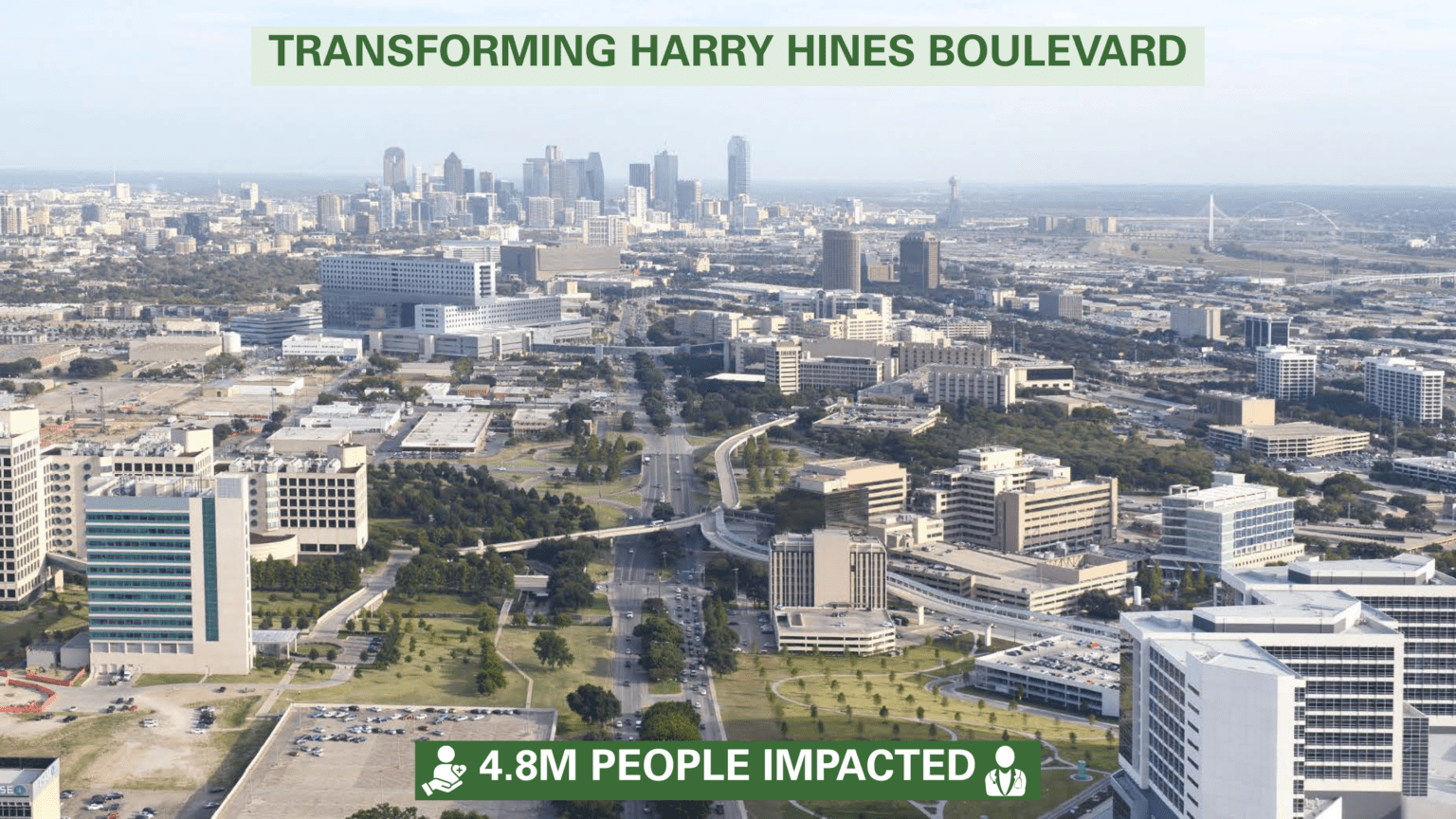
The Southwestern Medical District Transformation presents a unique opportunity to reimagine infrastructure in ways that recognize its true potential to influence human and environmental health, regional healthcare access, economic mobility, and quality of life. This transformation is determined to apply new ideas, best practices, and careful research to create a paradigm shift in how we design and build healthier places, with the intent to create a replicable approach that can be used both locally and nationally.
A District That Serves the Entire Region
The Southwestern Medical District is unique because its influence extends well beyond the neighborhoods that surround it. Patients travel from rural Texas communities, suburban cities, and underserved urban neighborhoods to access care within the District’s award-winning hospitals and medical facilities. Healthcare workers commute from every corner of the region. Researchers, students, first responders, caregivers, families, and local businesses and services navigate this environment every single day.
Many hospital systems within the District also share employees and operational partnerships across campuses, meaning mobility and circulation are not isolated to a single institution. Doctors, nurses, medical staff, researchers, and service personnel frequently move between facilities throughout the day, often navigating aging infrastructure, fragmented pedestrian conditions, and limited shade – conditions that are more reminiscent of Harry Hines Blvd.’s inaugural status as a “super-highway” than a road that services a 21st-century health-dedicated district.
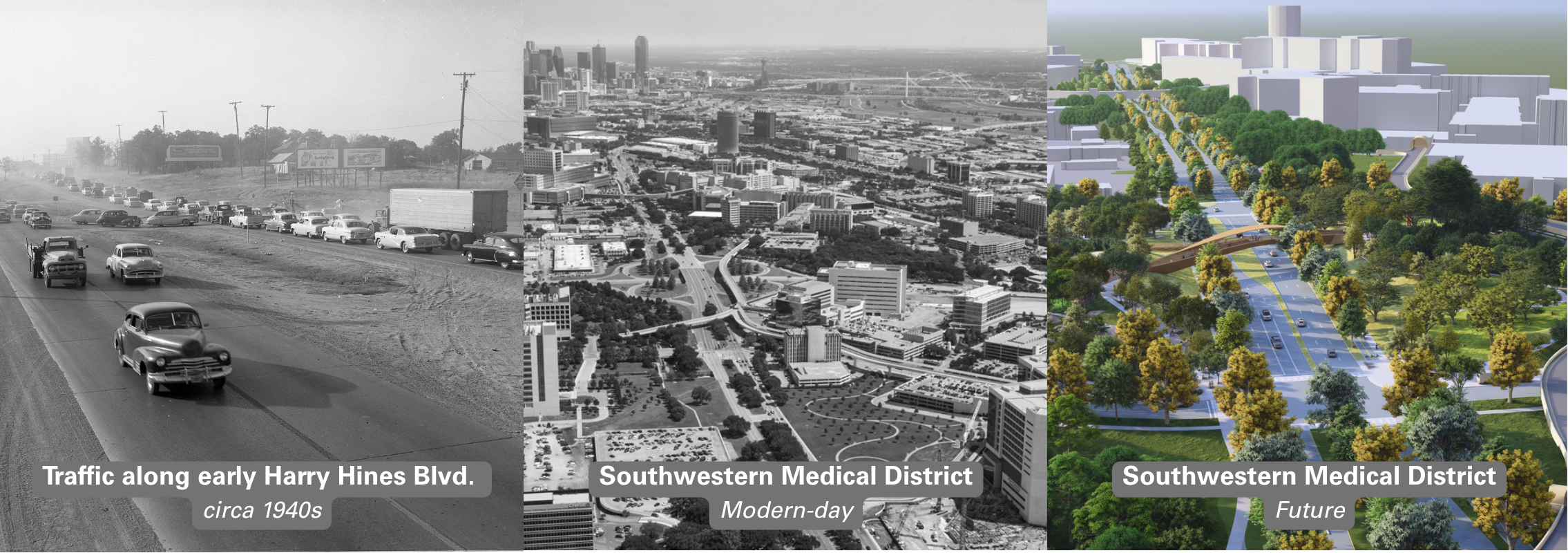
As the City of Dallas continues to grow and North Texas experiences unprecedented population growth, the demands on this corridor will only intensify.
We have an opportunity to completely reimagine the function of infrastructure in the Medical District to further solidify this neighborhood as the destination for health and healing in North Texas. The transformation underway recognizes a simple but important reality: healthcare infrastructure does not begin at the hospital door. The surrounding public realm — street and sidewalk systems, transit connections, green space and tree canopy, lighting and safety measures, ease of accessibility, and environmental quality — directly affects the experience of patients and their families, emergency response teams, and broader public health outcomes and workforce mobility goals.
“For patients recovering, for staff working long shifts, for students and researchers in the district’s campuses and for the neighboring communities that pass through daily, the transformation promises more than new asphalt and sidewalks. It offers an environment intentionally designed for human and environmental health.”
-María Ramos Pacheco, Dallas Morning News Reporter
Equity Through Access
One of the most important aspects of the project is its focus on equitable access.
The Southwestern Medical District serves people from every socioeconomic background. Many patients and employees rely on public transportation or alternative transportation options to reach the District safely and reliably. Others arrive during moments of crisis, uncertainty, or medical vulnerability.
Yet historically, the Harry Hines Corridor that bisects the District has functioned primarily as a high-speed vehicular thoroughfare (the road was profiled as a high-accident street as early as 1948 and is currently listed on the City of Dallas’s High Injury Network), creating barriers for pedestrians, transit users, cyclists, and individuals with mobility challenges in the District.
This project seeks to fundamentally change that experience by prioritizing:
- Safer pedestrian crossings and accessible pathways
- Improved integration with bus and transit stops
- Separation of vehicles, cyclists, and pedestrians
- Expanded tree canopy, vegetation, and shaded walkways
- Enhanced wayfinding and district connectivity
- Safer emergency and hospital access routes
These improvements will collectively create a public space that supports comfort, health and well-being, and dignity, making a meaningful difference for the vast range of people and situations that encounter the district.
Public-private partnerships are a critical component of delivering project goals. Our approach reflects broader regional planning priorities championed by our partners at the North Central Texas Council of Governments (NCTCOG), including multimodal transportation, environmental resilience, improved air quality, safety, and equitable regional connectivity.
NCTCOG has long emphasized the importance of building transportation systems that move people, not just vehicles, while supporting sustainable growth and improving access to jobs, education, healthcare, and other local opportunities. The Southwestern Medical District Transformation Project embodies those principles by reimagining infrastructure that is both people-centered and regionally significant.
Aligning with National Infrastructure Priorities
While the dirt will be turning locally, this project also reflects many of the priorities being emphasized at the federal level regarding infrastructure modernization, economic competitiveness, public safety, domestic growth, and environmental and community resilience.
Recent conversations in Washington, D.C., with the Department of the Interior and the Department of Transportation reinforced growing interest in projects that demonstrate measurable public impact while strengthening critical infrastructure systems that support regional economies and essential services.
What makes the Southwestern Medical District Transformation Project particularly compelling is that it does not approach infrastructure through the lens of a routine upgrade. Instead, it integrates transportation, public health, environmental resilience, safety, workforce mobility, and economic development into one coordinated strategy that is catalytic for the District’s future and other urban communities seeking to implement similar strategies nationwide.
Federal stakeholders consistently emphasized the importance of projects that:
• Improve operational efficiency and mobility
• Strengthen emergency response and public safety
• Support economic growth and workforce access
• Enhance resiliency of aging infrastructure systems
• Improve quality of life and public health outcomes
• Leverage partnerships between local, regional, state, and federal entities
The Southwestern Medical District project addresses all of these priorities simultaneously.
Insights from our discussions in D.C. also revealed the project’s potential to serve as a national model for reimagining the central role of public infrastructure in the health and well-being, quality of life, and resiliency of communities and cities. The ability to combine mobility improvements, innovative practices in urban forestry, green infrastructure, economic competitiveness, and placemaking into a unified implementation strategy is increasingly viewed as the future of major infrastructure development.
At a time when communities across the country are searching for innovative solutions to 21st-century challenges, the Southwestern Medical District Transformation Project offers a scalable model for improving both infrastructure performance and quality of life for all who depend on it. This project demonstrates how transportation investments can also strengthen healthcare systems, environmental outcomes, workforce access, and regional economic vitality.
[To learn more about the innovation behind the design process for the Southwestern Medical District Transformation, check out our biophilic design and evidence-based design blogs.]
The Role of Green Infrastructure in Public Health
Equity is not only embedded in our mobility systems but also in the environments we inhabit.
Communities across North Texas continue to grapple with rising temperatures, an intensifying urban heat island effect, air quality challenges, and a lack of access to green space, with vulnerable populations disproportionately affected. In the Southwestern Medical District, expansive pavement [86% impervious surface cover] and limited canopy coverage [5% canopy cover] create conditions that intensify the urban heat island effect, causing temperatures to feel up to 20 degrees warmer than the reported air temperature. These current realities of the environment have created some of the harshest pedestrian conditions in the city, all in a place where we are meant to heal.
The project’s strategic investments in green infrastructure – including a commitment to plant thousands of trees, install native, resilient plantings, sensory gardens, ground-level vegetation, green stormwater infrastructure and more – are all recognitions of the prominent role that our environments and infrastructure play in community health and well-being.
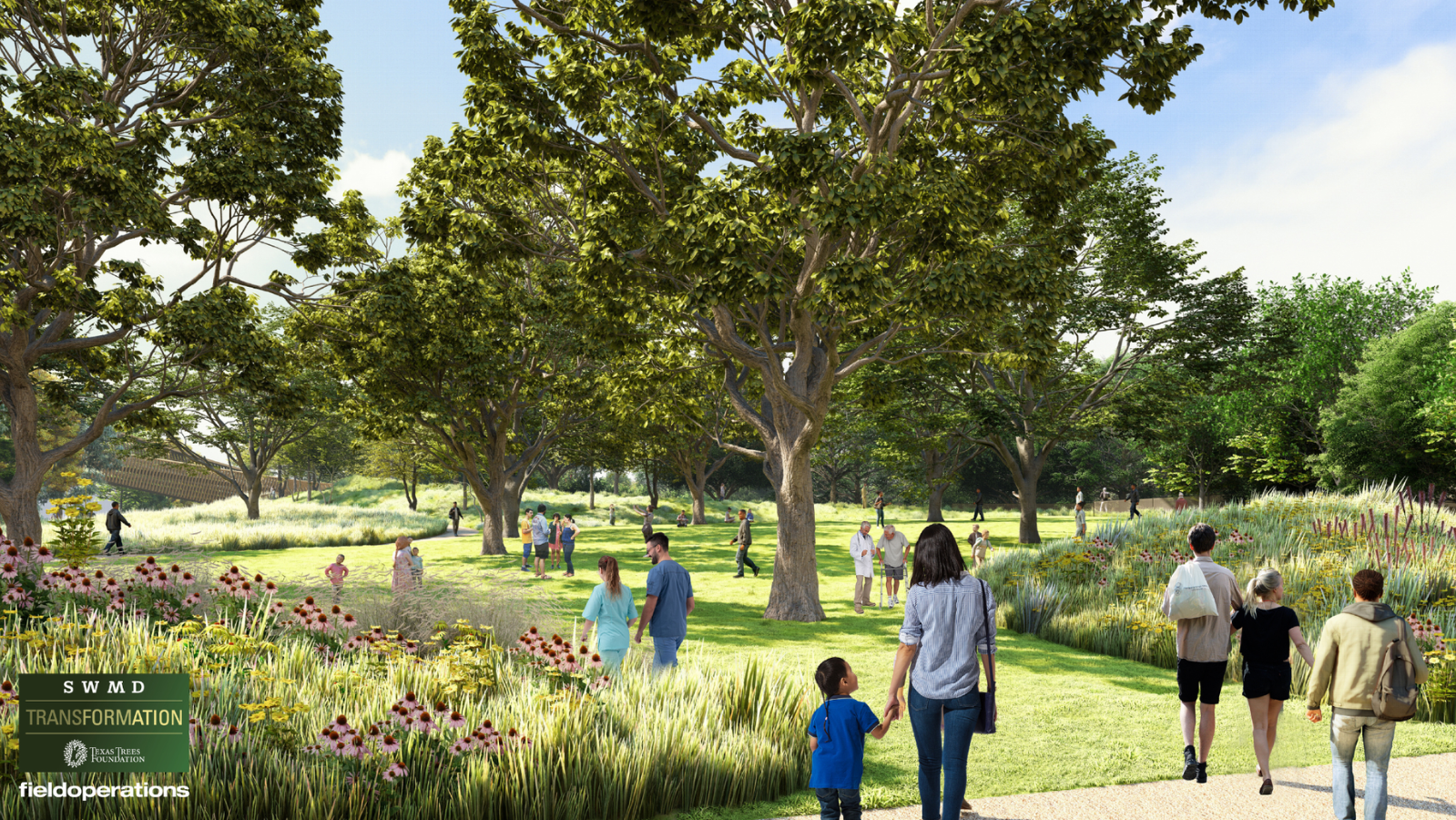
Research consistently demonstrates the relationship between environmental quality and human health outcomes. Cooler streets, cleaner air, reduced heat exposure, improved walkability, and access to restorative green space all contribute to healthier communities. In the Medical District, this reality is especially meaningful, as nature-based solutions are linked to improved patient experiences and better quality of life for healthcare providers.
“These days, the link between cumulative time spent in natural settings and health outcomes—including the big one, longevity—is solid. There’s data on cancer and heart disease, anxiety and depression, immune function and stress hormones, and more…and it’s not one study. It’s 500 studies.”
- Dr. Peter James, Harvard Public Health
For healthcare workers moving between facilities during long shifts, families navigating stressful medical visits, or patients recovering from treatment, the surrounding environment matters.
The District’s transformation recognizes that healing environments extend beyond building walls.
A Strategic Investment by the State of Texas
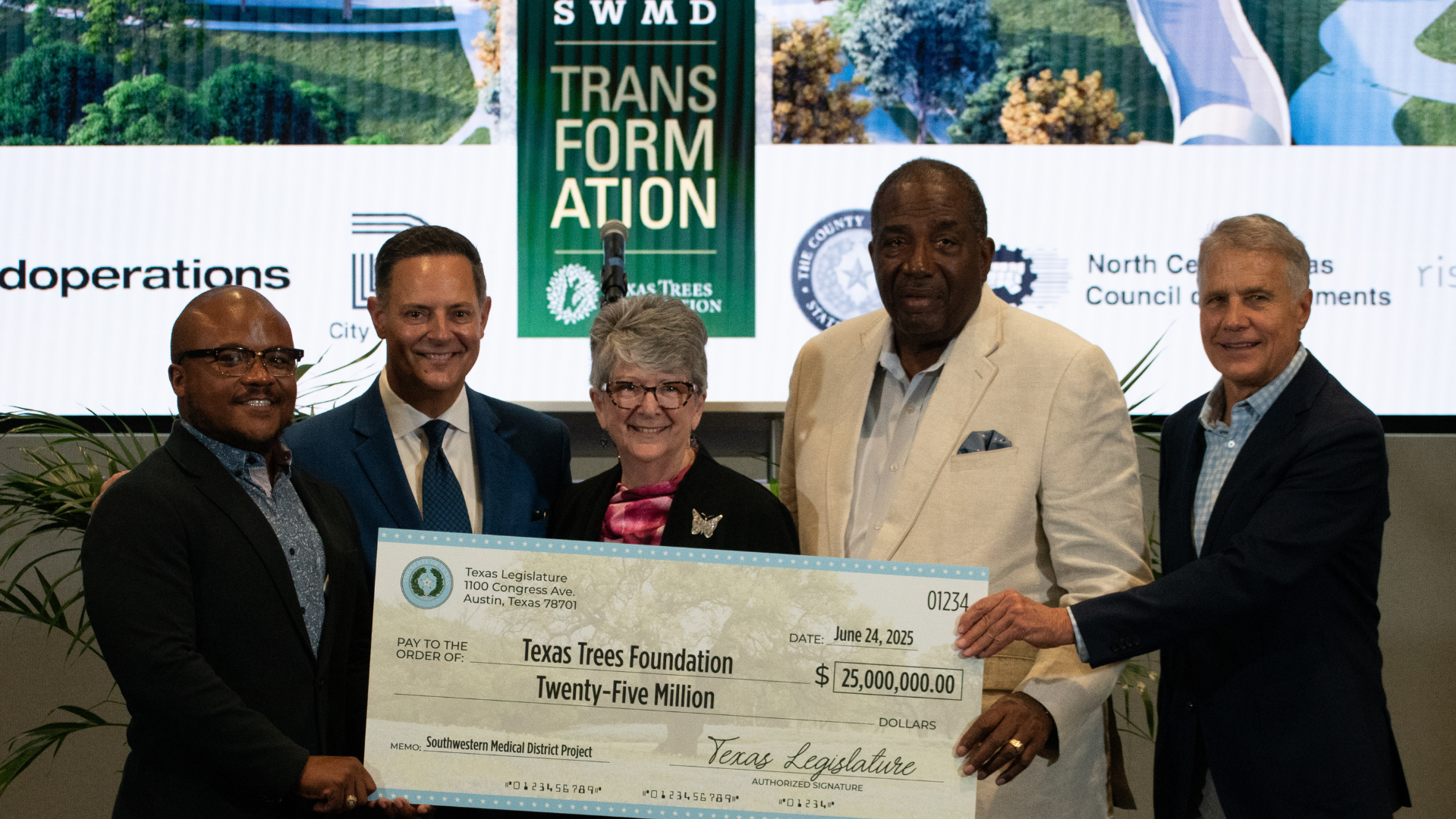
In 2025, the State of Texas committed a groundbreaking $25M funding commitment to the Southwestern Medical District Transformation Project. The State of Texas’ investment in the project reflects growing recognition that this corridor serves statewide importance due its far-reaching impact.
The institutions located within the District are economic engines, healthcare anchors, research leaders, and educational centers that contribute significantly to Texas’ economy and healthcare system. Research conducted by the Dallas-Fort Worth Hospital Council (DFWHC) reflects the incredible contribution of the healthcare industry to the broader regional economy, with an economic impact of $47 billion in 2025.
Improvements to mobility, safety, and infrastructure within the District strengthen not only Dallas but the broader statewide network of healthcare access and innovation.
Strategic investments in transportation and public infrastructure within major medical districts can also be understood as essential economic competitiveness initiatives. Efficient movement of people, emergency services, transit systems, and workforce populations directly impacts operational performance, healthcare delivery, and, in turn, long-term regional growth.
As North Texas continues to expand, infrastructure projects that integrate multi-modal transportation improvements and design improvements grounded in human health, environmental resiliency, and iconic placemaking will become increasingly critical.
A Strategic Investment in the District for the Next Generation
At its heart, the Southwestern Medical District Transformation Project is about preparing one of the nation’s premier medical districts for the future.
It ensures that a patient arriving, whether from a mile away or the rural outskirts of the metroplex, experiences dignity and accessibility. It is about creating safer and healthier conditions for nurses, physicians, researchers, students, and first responders. It is about improving mobility across one of Dallas’ busiest corridors while reducing environmental burdens and strengthening regional connectivity.
This project recognizes that infrastructure decisions made today will shape how North Texas moves, heals, and grows for generations to come.
Far more than simply rebuilding a roadway, the transformation is a powerful depiction of how infrastructure can support equity, accessibility, public health, economic competitiveness, and regional impact at one of the most important gateways in Texas, while positioning Dallas and North Texas as a national example of what next-generation infrastructure investment can achieve.
This blog was authored by Heather Stevens, SWMD Transformation Project Campaign Advisor, and President & CEO, Rise360.